
The stadium has not filled yet, but the athlete can already feel the contest arriving. A heartbeat feels louder than usual. Hands are warm, the warm-up routine seems too short and the mind begins offering predictions: What if I miss? What if the coach notices? What if this is the match that changes everything? Those sensations are not proof of weakness. They are common responses to uncertainty and importance. The more useful question is how the athlete interprets them and what happens next.
Sport psychology is sometimes sold as a method for eliminating nerves. That promise is both unrealistic and potentially counterproductive. A player can feel anxious and still make excellent decisions. Another may appear calm while avoiding every ambitious choice. Competitive readiness is better understood as a combination of preparation, attention, emotional flexibility, skills and environmental support. There is no universal psychological state that guarantees a winning performance.
The International Olympic Committee's updated 2026 consensus statement emphasises that athlete mental health is influenced not only by individual symptoms but also by training environments and organisational practices. It recommends regular monitoring and support rather than relying on a last-minute mental trick. That perspective applies to the routine anxieties surrounding matches as well: the person and the setting both matter.
Performance anxiety is not automatically an anxiety disorder
Pre-competition anxiety is often temporary. It may involve increased arousal, worry, stomach sensations, muscle tension or a heightened sense of scrutiny. The experience can change across a season and between events. An athlete who feels uncomfortable before a national final may be entirely comfortable at training; neither experience alone establishes a clinical condition.
The IOC's 2019 mental health consensus distinguishes ordinary pre-competitive arousal from clinically significant symptoms and discusses how an athlete's interpretation of anxiety can influence its effect. The document also warns against diagnosing psychiatric disorders merely because an elite athlete has routines, perfectionistic tendencies or intense competitive habits. An appropriate assessment looks at distress, duration, impairment and wider life context.
When worry becomes persistent, distressing or disruptive across sport, school, work, relationships or sleep, a qualified mental health clinician should assess it. A motivational coach, online quiz or performance programme should not claim to substitute for clinical care. Supporting performance and treating a mental health disorder are related but not identical jobs.
Why telling someone to calm down can backfire
A nervous athlete already knows that nerves are uncomfortable. Repeatedly ordering them to relax can make anxiety itself seem like a second opponent. The individual begins monitoring every physical sensation, looking for proof that they are now calm enough to perform. If the heart is still racing, the athlete may conclude that preparation has failed before play even begins.
A better approach is to identify what the athlete can do while arousal is present. A tennis player can direct attention to the next return position. A goalkeeper can review the communication cue used before a corner. A runner can settle into an early pacing plan. These actions do not require every uneasy sensation to disappear first.
The objective is not to pretend fear is enjoyable. It is to reduce the struggle against an unavoidable part of competition and reorient attention towards tasks that are trainable. This can be easier when the coach explicitly accepts that players may feel nervous. A team that equates visible anxiety with poor character creates avoidable pressure.
Start with a preparation routine, not a lucky ritual
A pre-performance routine is a short, repeatable sequence connected to the demands of a specific sport. It might include checking equipment, a breathing pause, one tactical cue and movement towards the starting position. Its value lies in creating familiarity and directing attention to relevant information. Its danger is becoming an inflexible condition that the athlete believes must be performed perfectly or the contest is doomed.
Consider a volleyball server. A workable routine may involve collecting the ball, choosing a target, taking a comfortable breath and committing to the planned serve. If the whistle changes the timing, the athlete should still be able to act. A routine that collapses when interrupted has become another source of vulnerability.
Coaches can practise routines in realistic, moderately pressurised drills rather than introducing them for the first time at a championship. The athlete should understand why each step exists. A phrase such as “eyes on the target” may be useful when it cues a trained action; a phrase that promises invincibility adds little.
Breathing as a tool, not a performance guarantee
Slower, controlled breathing can help some people regulate physiological arousal and create a moment to redirect attention. It is often inexpensive, discreet and easy to practise. But it is not a universal cure, and an athlete who becomes more aware of breath discomfort or dizziness should not force an exercise that feels wrong.
A sensible practice is to experiment with comfortable exhalations during training, observe what helps and avoid rigid numerical prescriptions. Some athletes find a longer exhalation calming; others prefer natural breathing paired with a movement cue. The relevant outcome is whether the method supports a return to the task, not whether a wearable device displays a perfect number.
Breathing practices also need proportion. A coach should not ask an athlete to spend so long managing internal sensations that they miss external information. A footballer defending a counterattack needs awareness of space and teammates, not continuous inward monitoring of respiration.
Where should attention go under pressure?
Pressure can narrow attention in unhelpful ways. Athletes may become absorbed by the score, the audience, the consequences of failure or the mechanical details of a movement that normally unfolds smoothly. Some of these concerns are legitimate, but not all are actionable during competition.
A practical method is to distinguish outcome goals from process cues. “Win the match” is a desired result. “Watch the opponent's early movement and recover to the centre” is a specific behaviour. A coach can reinforce process cues because athletes can practise them; the scoreboard cannot be controlled in the same way.
This does not mean never thinking strategically. A basketball point guard must read opponents and changing game conditions, not repeat an isolated slogan. Attention should be flexible enough to shift between immediate action and useful tactical information. The goal is not narrow focus for its own sake, but selecting what matters in the moment.
Confidence is a record of learning, not a feeling to summon
Athletes often wait until they feel confident before taking a difficult action. But confidence can also be built through repeated, appropriately challenging experience. A gymnast who has trained a sequence safely and consistently has something more concrete than an affirmation: a history of execution, feedback and adaptation.
After a poor performance, an athlete can review what was controllable, identify one or two adjustments and test them in practice. This is different from reviewing every mistake as evidence of personal inadequacy. Useful confidence tolerates uncertainty because it is based on a process that can continue even after a setback.
Coaches should separate evaluation of a performance from evaluation of a person. “Your timing was late on three receptions” provides information. “You are mentally weak” offers a label that can damage trust without explaining a skill. Language is part of the environment in which future performance develops.
Imagery and rehearsal: useful when connected to real practice
Mental imagery can be incorporated into sport preparation, especially when an athlete already knows the physical and tactical demands of an action. Rehearsing a start sequence, decision point or recovery from an error may help the athlete prepare for recognizable situations. Imagery is not a substitute for conditioning, safety practice or feedback from real movement.
A useful rehearsal includes imperfection. Instead of imagining only applause, a player can picture missing a first pass, hearing crowd noise and returning attention to the next play. This reduces the fragility of a perfect-performance script. The aim is not to create a fictional guarantee of success but to make effective responses more familiar.
Evidence for psychological skills training varies across settings, methods and outcome measures. A technique that helps one group may not produce the same result in every sport or individual. Practitioners should track whether a method actually improves task engagement, wellbeing or performance rather than selling an intervention merely because it sounds scientific.
Mistakes are part of a match: prepare for the next action
The moments after an error are often more revealing than the error itself. A defender loses possession, a runner misjudges the first lap or a server misses a target. The athlete may replay the mistake mentally while the contest continues. That lingering attention can turn one event into several.
A short reset sequence can help: notice the mistake, name an actionable correction if one is available, orient to the next demand and move. Different sports require different timings. A tennis player may have seconds between points; a goalkeeper may need to recover immediately during open play. The reset should fit the activity.
The principle is not to deny disappointment. An athlete can care deeply and still choose a next action. After competition, a fuller review can explore patterns and lessons. During competition, the immediate task usually deserves priority over a detailed self-judgment.
Coaches influence anxiety before the whistle
The team's emotional environment is built across weeks, not only by speeches on match day. Unclear selection decisions, public humiliation, threats tied to playing time and inconsistent feedback can increase fear of evaluation. Conversely, predictable routines, respectful communication and realistic expectations may make difficult competition easier to navigate.
The NCAA Mental Health Best Practices emphasise healthy environments and access to support, not simply teaching individuals to tolerate harmful conditions. They also recommend appropriate screening and professional involvement when symptoms warrant it. That system-level approach should extend to youth clubs and professional organisations according to their resources and responsibilities.
A coach can ask, “What information would help you feel prepared?” instead of “Are you ready to win?” A parent can wish a child enjoyment and engagement rather than asking them to justify every selection. These are ordinary human choices, but they influence whether sport is experienced as challenge or threat.
When to seek help beyond performance coaching
If anxiety leads to panic, persistent avoidance, sleep disruption, significant distress, loss of enjoyment or problems outside sport, the next step may be a licensed mental health professional. The same is true when a person describes hopelessness, self-harm thoughts, eating-related concerns or symptoms affecting daily functioning. These deserve compassionate professional care, not a suggestion to toughen up.
Support should respect privacy and choice. Athletic programmes need clear boundaries between coaches, sport psychologists, medical staff and mental healthcare professionals. Information should not be shared casually with selectors or teammates. Athletes are more likely to seek help when they understand what is confidential and what situations require safety-related disclosure.
The IOC's 2026 update advocates routine monitoring and a broader wellbeing approach. It does not imply that every anxious athlete should be diagnosed or medicated. Good support is proportionate, individualised and grounded in professional competence.
A 10-minute practice framework to adapt
Before training, choose one situation that commonly attracts pressure, such as a penalty, sprint start or difficult serve. Agree on a specific task cue and a short preparation routine. Practise the situation under ordinary conditions first, then add a modest challenge, such as a score or limited time. Observe how the athlete acts, not whether nerves are completely absent.
Afterwards, ask three questions: What did you notice? What helped you return attention to the task? What would you change in the next repetition? Keep notes brief and descriptive. If the athlete becomes distressed, stop escalating pressure and review the environment with qualified support.
Progress should be measured across multiple sessions. A single successful repetition proves little; one failure does not invalidate the method. Performance skills are learned, adapted and sometimes abandoned when they are not useful. There is no requirement that every athlete enjoy the same approach.
Questions athletes ask before big events
Is it normal to feel anxious before a game? Yes. Some pre-competitive arousal is common, especially when the outcome matters. Persistent or impairing symptoms deserve professional assessment rather than automatic normalisation.
How do I stop overthinking during sport? It can help to return attention to a practiced external cue, a decision or a next action. Trying to forbid thoughts altogether often creates another struggle. Experiment in training rather than relying on a new technique at the final.
Does confidence come before performance? Not always. Confidence can grow from repeated, appropriately challenging practice and learning how to recover after errors. Waiting for certainty may prevent useful action.
Should coaches use more pressure in training? Realistic challenge can support preparation, but intimidation, humiliation or unsafe exposure are not evidence-based performance methods. Challenge should be planned, developmentally appropriate and reviewed with the athlete.
An applied example: the moments before a decisive match
Imagine a basketball player about to enter the court for a major game. Training has gone well, but the arena noise changes how every familiar movement feels. The athlete begins thinking about selection, teammates and the consequences of a mistake. Nothing in that description is a diagnosis. It is an ordinary example of how uncertainty can compete with task-relevant attention.
Rather than promise to eliminate nerves, the player and coach can identify a short sequence already practised in training. Check the intended defensive match-up. Name one decision cue. Reconnect with the first play. This is an experiment in attention, not a demand to manufacture certainty. If the routine becomes too rigid, shorten it until it supports action rather than creating another performance test.
After the game, evaluation should separate the athlete's feelings from what actually happened. Did the player follow the intended tactical plan? Were there opportunities to make better reads? Did a mistake trigger an extended period of disengagement, or could attention return quickly? A score may be disappointing while a useful skill has improved. Alternatively, a win may conceal a pattern worth addressing before it becomes costly.
The same framework applies outside team games. A runner can rehearse responding to an overly fast opening pace. A gymnast can practise a safe, trained reset after an interrupted routine. A swimmer can agree on where attention belongs during the call room period. These are illustrative applications, not tested universal prescriptions. They must be adapted to the athlete's sport, safety needs and learning history.
Coaching language that makes difficult moments manageable
A demanding coach does not need to pretend mistakes do not matter. Technical standards remain important. The difference lies in how feedback is delivered. An athlete told “You always fall apart under pressure” receives a global judgement with little practical value. A player told “On the next possession, scan before the ball arrives” receives a behaviour they can attempt immediately.
Teams can practise brief communication rules in advance. During competition, give one or two actionable cues rather than flooding a distressed athlete with explanations. After competition, schedule fuller tactical discussion when the player is able to think and listen. Ask permission before reviewing emotionally difficult moments and avoid turning every post-match journey into an unsolicited examination.
The coach should also listen to what makes a situation stressful. Pressure can arise from unrealistic promises, unclear roles, financial insecurity, an intimidating environment or concerns about selection. Teaching a breathing technique while ignoring threats and humiliation would misidentify the problem. A competent programme considers both individual skills and conditions it has responsibility to change.
This can be evaluated without claiming to measure a person's character. Ask whether the athlete reports a clearer understanding of their role, whether staff follow agreed communication practices and whether the team has safe routes for health and safeguarding concerns. Progress may look like better collaboration or earlier help-seeking before it looks like a championship result.
Mental skills belong in ordinary training, not only in crisis
Introducing a psychological strategy for the first time in the most important contest of the season places unnecessary expectations on it. Instead, build short experiments into normal practice. Choose a specific skill, explain the reason for practising it and provide opportunities to adjust it. The aim is to create a workable response under gradually changing conditions, not a superstitious ritual.
A training drill might begin without time pressure. The coach then adds a score or decision constraint appropriate to the player's development. After each repetition, the athlete describes which cue was useful and where attention drifted. Some strategies will help; others will not. A method should not be retained merely because it appears in a popular motivational book.
Qualified sport psychologists and mental performance practitioners can assist with skill development within their legal and professional scope. When a problem concerns clinical distress, trauma, disordered eating or persistent panic, appropriate mental healthcare and privacy are essential. Coaches must respect those boundaries rather than treating access to a starting place as leverage.
The problem with the promise of absolute mental toughness
Athletes are often asked to show mental toughness by never revealing fear, fatigue or uncertainty. That idea can discourage disclosure of injuries and psychological distress. It also creates a false opposition between excellence and support. A person may be highly determined and still need guidance, treatment or time away from competition.
A more useful question is whether the athlete can respond flexibly to the challenges they face. Sometimes that response is to stay engaged with a tactical cue. Sometimes it is to disclose symptoms or request a safer environment. Neither action is inherently a sign of weakness. The context determines what responsible performance requires.
Research summaries should be presented with limits. Studies of psychological skills differ by participant experience, method, outcome measure and sport. A pooled average does not describe what will happen to a particular individual. Consensus statements identify important concerns and professional responsibilities; they do not prove that one script or exercise will improve match results for everyone.
Evidence context and limits
This article combines athlete mental health consensus guidance, sport psychology literature and illustrative coaching practice. It does not claim that normal pre-competition nerves are a disorder, that attention training treats clinical anxiety, or that one technique guarantees success. Conditions such as persistent panic or substantial impairment need individual assessment by a qualified professional. Psychological strategies should be tested with the athlete's informed involvement, and a training environment that produces avoidable harm should not be excused by demands for resilience.
Research and further reading
- Reardon, C. L., and colleagues (2019), Mental Health in Elite Athletes: International Olympic Committee Consensus Statement; British Journal of Sports Medicine, environmental and clinical considerations for athlete care. Original source
- International Olympic Committee (2019), IOC Mental Health in Elite Athletes: Consensus and Implementation Context; expert guidance addressing support systems and professional boundaries; DOI: [10.1136/bjsports-2019-100715]. Original source
- National Collegiate Athletic Association (n.d.), Mental Health Best Practices, organisational approaches to supportive environments, clinical referral and safeguarding obligations. Original source
- Hatzigeorgiadis, A., and colleagues (2011), Self-Talk and Sports Performance: A Meta-Analysis; Perspectives on Psychological Science, sport-specific interventions and limits. Original source
- International Olympic Committee (2026), Mental Health in Elite Athletes: Updated Consensus Statement; modern guidance on regular monitoring and system-wide action. Original source
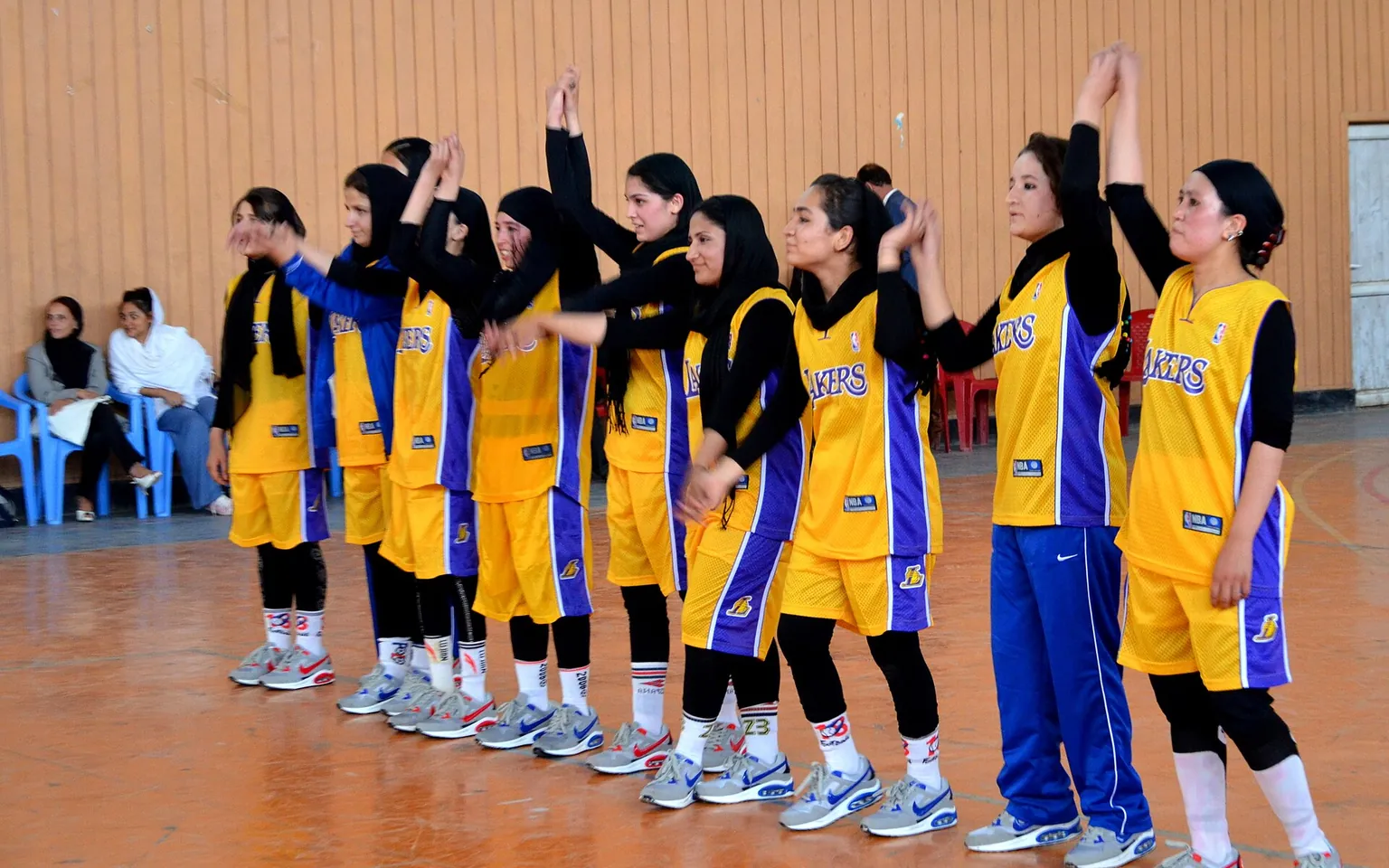
Illustrative historical sports photograph, not an event or athlete endorsement of Sportive Minds. Source: original Commons file; photographed 2011-08-10; credit Sgt. Catherine Threat / US Army; licence U.S. federal government public domain.