
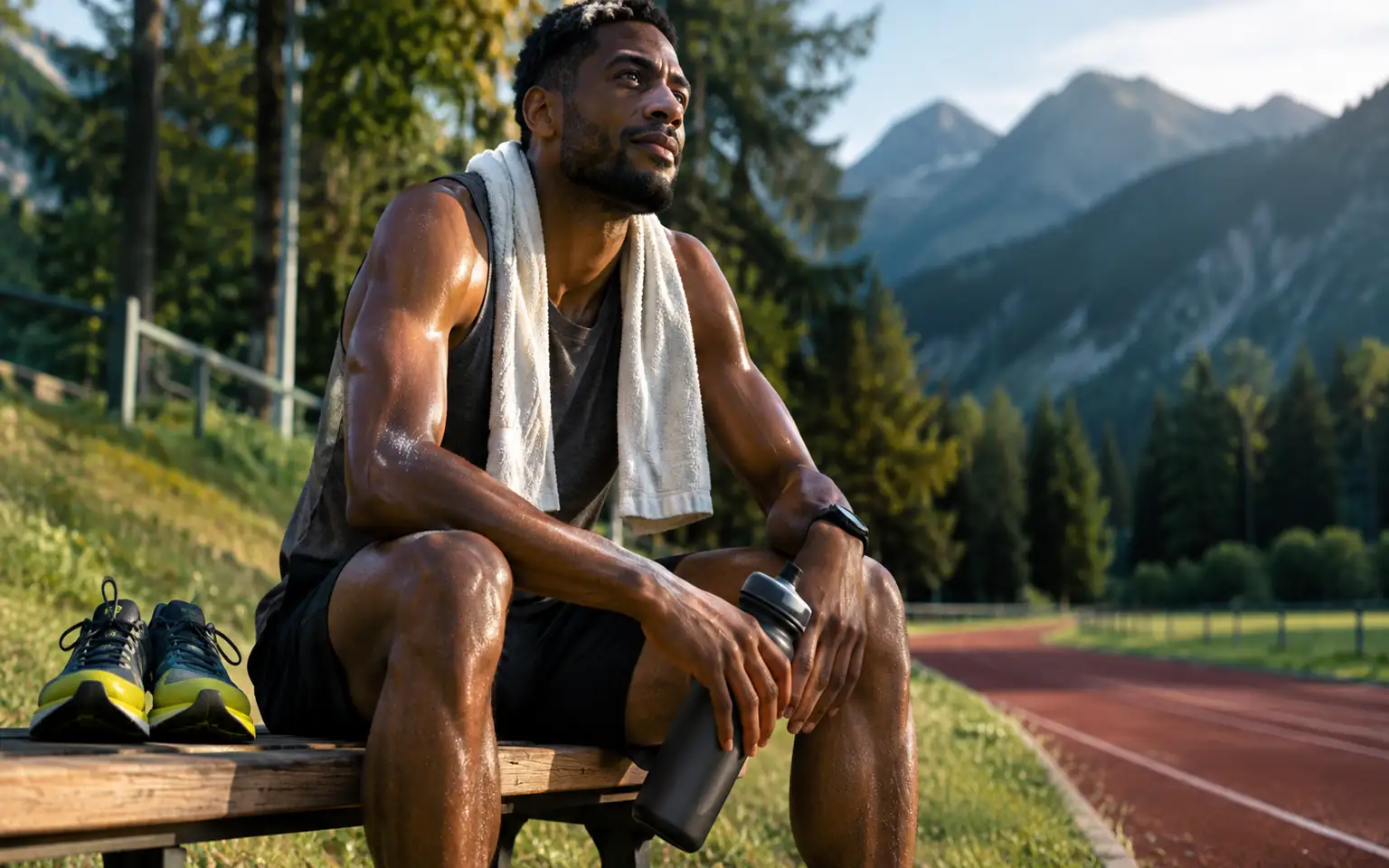
At the end of an intense training day, a young athlete may log every kilometre, every lift, every heart-rate zone and every minute spent in the gym. Yet the hours after leaving the facility are often treated as empty space: time that does not count because no one is watching. Recovery is not empty space. It is part of how training becomes adaptation, and sleep is one of its central conditions.
That does not mean sleep is a magic supplement or that a better night guarantees a personal best. Sport is too complex for such promises. Recovery depends on training load, nutrition, physical health, daily stress, travel, environment and time. What makes sleep unusually valuable is that it belongs to health as well as performance. Walsh and colleagues' expert consensus describes sleep inadequacy as common in elite athletes while acknowledging that the experimental evidence is uneven. The honest message is both encouraging and precise: create conditions for healthy sleep, measure only what is useful, and resist marketing that turns one night's number into a verdict on an athlete.
The part of training you cannot see
An interval session supplies a stress to the body. Strength training challenges muscle and connective tissue. Technical training asks the nervous system to recognise and reproduce patterns under demanding circumstances. None of these inputs automatically makes an athlete better. Adaptation takes place in a wider cycle of load, nourishment and recovery. Appropriate rest is therefore not a reward earned after training; it is one of the conditions that permits training to be productive.
Sleep participates in physiological regulation, memory processes and ordinary health. But no single sleep stage should be sold as the exclusive moment when muscles grow or all learning takes place. Popular graphics can make a complex biological system look as simple as a battery refilling. In reality, hormones, brain processes and tissues interact across many waking and sleeping hours.
The 2021 athlete sleep consensus warns that many studies have methodological limitations, including inconsistent measurement and underrepresentation of women. It is possible to take sleep seriously without claiming that one wearable metric explains the entire recovery process. Coaches who understand this can stop asking athletes to optimise a number and start asking whether training, travel and everyday life actually leave enough time for restorative sleep.
The practical question is not, "Did you win the sleep score?" It is whether the schedule gives each person a realistic opportunity to sleep adequately and arrive able to train with attention and physical readiness.
How many hours do athletes really need?
There is no responsible universal prescription for every athlete. Age matters; so do individual needs, training demands, health conditions and sleep opportunity. The American Academy of Sleep Medicine consensus recommends that teenagers aged thirteen to eighteen generally sleep eight to ten hours in each twenty-four-hour period for optimal health. That is a population health recommendation, not a promise of a medal for every child who reaches the upper boundary.
For adults, the picture is less reducible to a precise sporting target. Walsh and colleagues note that advice about seven to nine hours may not be ideal for everyone in elite sport and advocate an individualised approach. Some athletes may need more opportunity for sleep during periods of intensified training, illness recovery or travel. A short night is different from a chronic pattern of insufficient sleep; both deserve context.
A teenager leaving a late match, travelling home, eating dinner and waking early for school may find even the lower end of recommended sleep difficult to reach. Advising that teenager to "sleep more" without changing training times is an incomplete intervention. The adults who control the timetable have more influence over that problem than a motivational poster about discipline.
A useful first step is to compare actual bed and waking opportunities across a typical week, including travel and weekends. That reveals whether an athlete has sufficient time available before anyone needs to judge their willpower or buy a monitoring device.
What happens after a poor night?
Everyone has trained after sleeping badly. One disappointing night can change how alert or enthusiastic a person feels, but it is not proof that they will necessarily compete poorly. The research makes an important distinction between total sleep deprivation and partial restriction over one to three nights. Studies of complete deprivation tend to show performance costs, while results after short periods of partial restriction are more variable.
The Walsh consensus explicitly describes those uncertainties. Different sports demand different combinations of sustained attention, fine motor control, reaction, strength and endurance. A laboratory task is not identical to a match played under pressure. Other factors, such as illness or travel, may be present at the same time.
If an athlete sleeps badly before a final, a coach should not impose an additional burden by declaring that the performance is already ruined. The goal is to help the player follow the ordinary warm-up, communicate clearly and manage what is still within their control. After the event, the team can address a repeating sleep problem without blaming one result on an unmeasured cause.
There is also a danger in excessive focus on sleep: becoming frightened of a bad night can turn healthy attention into another source of precompetition anxiety. No wearable can measure an athlete's worth, and no sleep score should be treated as a starting-line penalty.
Why the schedule is often the real problem
An athlete's sleeping environment is shaped by organisational decisions. Training at dawn may seem efficient for facilities, but it can collide with teenagers' biological timing. Evening matches can push meals, transport and emotional unwinding late into the night. International travel adds time-zone changes and unfamiliar accommodation. Shift work, financial obligations or caring responsibilities affect adult and semi-professional athletes in ways an elite training plan may overlook.
These are not excuses. They are constraints to be managed. Walsh and colleagues identify training timing, travel and competition stress as sport-specific contributors to sleep inadequacy. The same consensus discusses late-evening chronotypes and the difficulty some people experience when schedules are built entirely around early starts.
Clubs can act at system level by publishing schedules earlier, reducing unnecessary late-to-early turnarounds and discussing travel arrangements rather than simply telling athletes to adapt. A university team might align access to recovery facilities with course schedules. A school club might coordinate tournament departure times with families who travel long distances.
A high-performance culture should make demanding training possible without treating sleep deprivation as evidence of commitment. When a team celebrates exhaustion as a badge of honour, it may be undermining the very performance it claims to protect.
Recovery is bigger than sleep
Sleep cannot compensate for every other gap in an athlete's preparation. If training load escalates too rapidly, tissue stress may exceed the body's ability to adapt. If energy intake is inadequate relative to exercise demands, an athlete may develop important medical problems. If an injury is ignored, a good sleep routine does not make it safe to keep competing.
The American Academy of Pediatrics 2024 clinical report explains that excessive training load without sufficient recovery can contribute to overuse injury, overtraining and burnout in young athletes. The IOC REDs consensus discusses the health and performance consequences of low energy availability in both female and male athletes. Neither document suggests that a single intervention, such as sleeping longer, solves every problem.
That is why recovery should be discussed by the whole team: athlete, coach, appropriately qualified medical staff, nutrition professional where indicated and family for younger competitors. The conversation should include the match calendar, total training across multiple clubs, recent symptoms, access to food, travel and rest.
It is irresponsible to recommend a precise supplement, calorie target or training reduction for a stranger on the basis of an article. The useful public lesson is the integrated model: physical load, nutrition and sleep all require attention, and persistent warning signs warrant individual evaluation.
A practical week of recovery
Imagine an adult amateur endurance athlete preparing for a race while working full time. The training plan contains a hard session on Tuesday, an easier session on Wednesday, another demanding effort on Thursday and a long session at the weekend. The calendar may look balanced on paper. The real week may include a delayed train on Tuesday, a sick child on Thursday and an early business meeting on Friday.
The training plan should be reviewed against actual recovery opportunities rather than defended as though it were independent of life. If the athlete cannot sleep adequately after successive early starts, the coach might adjust session timing or redistribute intensity. That is a coaching decision informed by context, not a universal prescription or a suggestion that tiredness always requires medical treatment.
The athlete can keep a simple log of when they went to bed and woke, how refreshed they felt and whether the training session was completed as intended. A one-week snapshot can uncover barriers that a sophisticated dashboard obscures. It might show that the hardest problem is not physiology at all, but commute length.
The outcome to seek is a sustainable pattern. The success of a plan should be judged over weeks and months: participation, health, progress and life compatibility. One excellent night's sleep and one impressive workout cannot establish that a programme is working.
Can a nap help?
Short daytime naps can sometimes support alertness and mood, particularly when schedules constrain night-time sleep. But they are not a universal replacement for a regular sleep opportunity. The athlete sleep expert consensus discusses naps as one possible tool and highlights the need for more controlled research about their effects on performance.
Timing matters. A nap taken too late may make it harder to fall asleep at the desired bedtime. An athlete waking from a longer nap may briefly feel groggy, which is not ideal immediately before a demanding or safety-sensitive activity. Individual schedules, work requirements and travel conditions change what is practical.
For families, the priority should not be to calculate a perfect nap formula for a child. It is to protect the larger sleep window, review excessive schedule demands and avoid treating rest as laziness. An adolescent exhausted after school and training may be telling the adults around them that the timetable needs attention.
Coaches should also ask whether naps are being used to conceal a chronic problem. If repeated late sessions and early transport leave players routinely sleep-deprived, providing a quiet room for a brief rest is helpful but incomplete. A more durable solution may require changing the programme.
Travel, jet lag and competition
International competition is among the clearest examples of why recovery cannot be separated from logistics. A team may train at one time, fly across several time zones and compete when the local clock disagrees with familiar routines. Even without crossing time zones, long journeys can disturb meals, sleep opportunities and ordinary rhythms.
Experienced teams may plan arrival times, daylight exposure, training loads and recovery periods around the destination. Those arrangements depend on individual circumstances and the direction of travel. The Walsh expert consensus includes strategies for managing travel-related sleep difficulties while cautioning that research quality differs across interventions.
For young athletes, logistical safeguards are especially important. Transport should be supervised appropriately; rest stops, accommodation, food access and school obligations matter. No parent should be pressured to purchase expensive interventions on the promise that they will erase jet lag or guarantee performance.
A travel plan can include ordinary questions: Can the athlete sleep before an early start? Is a late return followed by another hard session? Does the itinerary provide realistic time to eat and recover? Will a qualified adult be available if illness develops? Good planning often looks simple because it anticipates problems before they become dramatic.
The wearable score is not the athlete
Sleep trackers offer an appealing number every morning. Some provide estimates of sleep duration, timing, heart rate or stages; a few make confident claims about recovery readiness. These measures are not interchangeable with clinical assessment or laboratory sleep studies. Validation varies between products, populations and conditions.
The 2021 athlete consensus explicitly warns about limitations of consumer sleep technologies, especially when interpreting sleep stages. It also raises concerns about privacy and the possibility that athletes become preoccupied with monitoring. In a culture already saturated with performance metrics, a number can create anxiety instead of useful knowledge.
A practical question is whether the device changes a decision that genuinely improves health. If it reveals that an athlete habitually goes to bed too late because of transport, that may be actionable. If it announces a low readiness score and the coach turns it into public criticism, the same device may be doing harm.
Teams should be transparent about who can access data and why it is collected. Minors deserve particular protection. Consent to wear a device should not automatically imply unrestricted sharing of sensitive behavioural or health information with every coach, sponsor or administrator.
What about nutrition and late meals?
Athletes need enough energy and nutrients to support their sport and health. But discussions about nutrition can easily slide into rigid rules, weight stigma or simplistic claims that one food controls sleep. An athlete with a late competition may need a practical evening meal despite marketing that warns against eating after an arbitrary hour.
The IOC REDs consensus places low energy availability within a broad medical framework, not a lifestyle trend. A footballer training twice in a day, a distance runner preparing for a race and an adolescent gymnast may have very different nutritional requirements. None should be given an individualised plan on the basis of an online checklist.
If an athlete reports a repeating pattern of fatigue, frequent illness, injury or difficulties around eating, the correct next step may involve a qualified health professional. A coach can create a supportive environment by asking about access to meals, travel schedules and recovery opportunities without demanding sensitive body details in public.
The most reliable recovery approach is often less glamorous than supplement marketing: reasonable training progression, adequate nourishment, regular opportunities to sleep and timely care when problems appear.
When fatigue is a warning sign
There is a difference between feeling tired after a demanding session and experiencing persistent deterioration in health or performance. One hard workout can reasonably produce temporary fatigue. Repeated exhaustion, declining performance, illness, injury, marked mood changes or difficulty functioning in ordinary life deserve a wider review.
The AAP 2024 report distinguishes overuse injury, overtraining and burnout, while explaining that they may occur in overlapping contexts. It does not provide a self-diagnosis that athletes can safely apply after reading three symptoms online.
Coaches should resist explanations such as "not mentally tough enough" when an athlete repeatedly struggles to recover. Medical, nutritional, sleep-related, psychological and environmental factors may all need consideration. Severe, sudden or concerning symptoms should be assessed promptly by qualified clinicians; an article cannot rule out illness or injury.
For younger athletes, multiple teams can unintentionally combine their training loads. A school coach may think the week is moderate while a private academy schedules additional intensive sessions. Families can help by making the whole calendar visible to the relevant adults, with appropriate privacy. Sometimes the simplest protective action is to stop treating each programme as though it is the only one.
Why a recovery day can be a good coaching decision
A rest day is often described as time off, but a more accurate term might be planned recovery opportunity. A coach may include lower-intensity movement, technical review, social time or complete rest depending on the athlete's needs and the structure of the season. The distinction is not between strong athletes who train and weak athletes who stop. It is between appropriate load and load imposed without sufficient evidence of readiness.
The IOC youth athletic development consensus urges sustainable, inclusive and health-conscious training for younger competitors. It highlights the risks of expanded competition calendars and insufficient recovery, among other concerns. Those principles also have relevance for adults who must balance sport with employment, family and ordinary health.
A well-managed recovery day should not become another compulsory assessment. Demanding that athletes post proof of restorative activity on social media can turn rest into performance theatre. Nor is a rest day an automatic medical treatment: persistent problems still require evaluation.
The larger opportunity is cultural. When a team openly respects recovery, injured athletes may feel safer reporting symptoms, and coaches can make changes without framing them as punishment. Good judgement sometimes means doing less of the right activity so the next session is more meaningful.
An evidence-informed routine without perfectionism
A routine might begin with consistent opportunities to go to bed and wake at reasonable times, adjusted for age, work, travel and competition. Comfortable, quiet and sufficiently dark sleeping conditions can help. Morning daylight, practical planning around stimulants and a wind-down period may support everyday sleep habits, although individual responses differ.
The Walsh consensus describes education and screening as useful starting points. It does not promise that every habit will transform sporting results. An athlete with persistent insomnia or suspected sleep-disordered breathing needs appropriate assessment, not endless self-experimentation.
It may also help to reduce the number of people giving conflicting advice. A strength coach, head coach and parent should not each impose separate sleep targets based on different apps. The programme needs a shared purpose: protect health and allow sustainable training. For a minor, participation in monitoring should be explained clearly and handled with safeguarding and privacy.
The most powerful routine is one that survives ordinary life. If it depends on buying expensive equipment, never missing a minute of bedtime or eliminating every social occasion, it may be impractical and unnecessarily restrictive. A useful routine is flexible enough to support the person who must live with it.
The human side of elite performance
Stories of champions can inspire, but they can also mislead when readers turn an individual habit into a universal rule. A medal winner may describe an early bedtime, a special pillow or a particular ritual. That anecdote can be meaningful to the person concerned; it is not a controlled experiment.
Consider the demands of Olympic track cycling. Harrie Lavreysen's documented Sportive Minds biography explores the development of exceptional sprint ability and a career transition from BMX. It does not provide evidence about his private sleep schedule, so this article does not invent one. The legitimate connection is broader: elite competition combines physical preparation, technical decisions, travel, teamwork and long-term development.
The useful question to ask about any champion is not whether copying a ritual will produce similar results. It is whether a practice fits the available evidence, the athlete's circumstances and their health. For someone returning after an injury, our related Journal feature When an Injury Changes Who You Think You Are explores why belonging and communication must accompany physical rehabilitation.
Good editorial writing should leave room for admiration without selling a shortcut.
What parents should know about sleep and school sport
Families see the costs of sporting schedules long before clubs collect performance data. A late game can mean a long drive, unfinished homework and an early start the next day. A teenager may have insufficient time to sleep, not an insufficient desire to do so.
The AASM paediatric sleep consensus is a useful reference because it describes age-related health needs rather than elite selection requirements. Its eight-to-ten-hour range for adolescents should prompt adults to examine actual opportunities, not shame an individual child for a difficult week.
Parents can ask coaches about training finish times, travel demands and how recovery is planned during exams. Coaches can communicate calendars earlier and make it acceptable to discuss competing responsibilities. A school can acknowledge that elite ambitions and education need not be enemies but do require coordination.
If a child appears persistently unwell, sleepy, distressed or injured, seek professional assessment. It is not necessary to decide whether the problem is psychological or physical before asking for help. One of the best reasons to protect sleep is that the athlete is a developing person, not simply a performer.
Questions worth asking before buying a recovery product
Commercial recovery culture offers expensive mattresses, wearables, supplements, cooling systems and many other products. Some may be useful in specific circumstances; others are sold with promises stronger than their evidence. Before spending, ask which problem the product solves, whether simpler changes have been tried, whether it has been evaluated in people like the intended user and whether a qualified professional would recommend it.
A team with repeated late-to-early training may benefit more from revising its timetable than from an expensive sleep score. A teenager who struggles to access enough food after away matches may need better logistics rather than a fashionable recovery drink. An athlete with persistent medical symptoms needs care rather than a new gadget.
The Walsh consensus emphasises individual assessment and limitations of evidence. The IOC REDs statement demonstrates that some apparently simple fatigue problems can be clinically complex. Taken together, they support cautious decisions and a refusal to promise universal results.
The aim of good sports technology should be better-informed action, not the production of more numbers that people feel pressured to obey.
The recovery conversation every team should have
At the start of a season, coaches can ask whether the timetable allows sufficient sleep, especially around travel, examinations and major fixtures. They can ask athletes how fatigue is discussed, who receives reports of pain or illness and whether an athlete can request medical help without fear of losing their place. These questions belong to performance management as much as to welfare.
A simple shared process may help: notice a meaningful change, ask privately about context, review training and recovery opportunities, refer to qualified professionals when indicated and revisit the decision. For younger athletes, explain the process to families and protect personal information. Avoid publishing individual sleep scores or medical concerns in team groups.
Evaluation should be honest. If the team changes training times, examine whether athletes report better access to sleep and whether schedules are more manageable. Do not declare a performance improvement without appropriate evidence or confuse the absence of complaints with proof of health.
The lasting achievement is not a perfect dashboard. It is a culture where training load is considered alongside sleep, food, health, education and the human circumstances of the people doing the work.
Rest is part of ambition
There is a persistent myth that serious athletes are distinguished by how much discomfort they tolerate without comment. Competitive sport does demand effort, and no one should pretend that success is effortless. But effort is valuable when it serves a sustainable purpose. Exhaustion by itself is not a trophy.
Sleep is not the opposite of training. It is part of the conditions in which training can become development. The scientific evidence is neither complete nor evenly distributed across sports, ages and sexes. That uncertainty should make advice more careful, not less useful.
The most credible commitment a coach can make is to plan intelligently, respond to individual circumstances and change course when evidence suggests a problem. An athlete can take recovery seriously without becoming obsessed with it. A family can support sporting ambition without sacrificing basic health to every tournament.
If sport is worth pursuing for years, then recovery must be designed for years as well. The strongest programme may not be the one that asks for the most every day. It may be the one that knows when to let a person rest.
Evidence context and limits
The Walsh et al. consensus is an expert narrative synthesis with acknowledged weaknesses in the underlying sport-specific experiments; it is not proof that a fixed number of hours guarantees a given performance change. Paruthi et al. (2016) set consensus sleep-duration ranges for general paediatric health, not for individual selection decisions. Brenner and Watson (2024) provide paediatric clinical guidance rather than a diagnostic instrument for lay readers.
Research and further reading
- Walsh, N. P., et al. (2021; online 2020). Sleep and the athlete: Narrative review and 2021 expert consensus recommendations. British Journal of Sports Medicine, 55(7), 356–368. DOI: 10.1136/bjsports-2020-102025. Original source
- Paruthi, S., et al. (2016). Recommended amount of sleep for pediatric populations: A consensus statement of the American Academy of Sleep Medicine. Journal of Clinical Sleep Medicine, 12(6), 785–786. DOI: 10.5664/jcsm.5866. Original source
- Brenner, J. S., & Watson, A. (2024). Overuse injuries, overtraining, and burnout in young athletes. Pediatrics, 153(2), e2023065129. DOI: 10.1542/peds.2023-065129. Original source
- Mountjoy, M., et al. (2023). 2023 International Olympic Committee's (IOC) consensus statement on Relative Energy Deficiency in Sport (REDs). British Journal of Sports Medicine, 57(17), 1073–1097. DOI: 10.1136/bjsports-2023-106994. Original source
- Bergeron, M. F., et al. (2015). International Olympic Committee consensus statement on youth athletic development. British Journal of Sports Medicine, 49(13), 843–851. DOI: 10.1136/bjsports-2015-094962. Original source
*Editorial note — 19 November 2026. This independently authored feature is educational, not individual medical, sleep, nutritional or training advice. The people in the exclusive cover photograph are fictional editorial subjects, not identifiable competitors or endorsers. Literature limitations and applicable populations are stated in the text.*
Editorial illustration using an original Sportive Minds photograph featuring fictional people; not documentary reporting or endorsement.