
The teenager who stops playing is often described as someone who “lost motivation.” That explanation is convenient because it places the entire decision inside the young person. It may also miss the more useful story. Perhaps transport became too expensive, the coach stopped making room for less experienced players, a friendship group dissolved or school and training demands became impossible to combine. Perhaps the teenager found another activity they genuinely prefer. Leaving one sport can mean many things.
The challenge for clubs is to distinguish normal changes of interest from avoidable exclusion and to protect the possibility that young people remain active in ways they enjoy. A youth programme can produce excellent results while also driving participants away. Conversely, a community club may have relatively few elite successes while providing long-term physical activity, friendship and belonging to hundreds of people.
Research on dropout is complicated. Some studies follow young people over time; others ask former participants why they stopped. The reasons reported are affected by the setting, culture, gender, financial circumstances, age and what young people consider “sport.” A person who leaves a competitive team to cycle with friends may disappear from a club's membership records without becoming inactive. Responsible reporting should not treat all departures as failures.
What counts as dropping out of sport?
There is no single universally accepted meaning. A competitive league might define dropout as no longer registering for its tournament. A school might record whether a student participates in extracurricular teams. A public-health survey might ask about activity in any context. The distinctions matter because they produce different numbers and different explanations.
Imagine a sixteen-year-old who leaves volleyball after being moved into an older competitive group. She begins dance and walks to school. From the volleyball club's perspective she is a loss; from the perspective of physical activity she may still be engaged. Another teenager leaves the same team after repeated humiliation and stops all organised activity. Treating these two stories as interchangeable obscures what the club could have done.
A useful measure of youth sport success should look at sustained participation, wellbeing and opportunities to return, not simply who remains on the team sheet each season. Clubs can ask former members about their experience without pressuring them to justify private choices. Aggregated, anonymous responses can reveal barriers that are invisible in registration data.
Enjoyment is a serious developmental concern
The belief that young sport must be unpleasant in order to produce high performers is widespread but poorly supported as a universal principle. Training can be challenging, competitive and demanding while still being meaningful and enjoyable. Enjoyment does not imply that every session feels easy. Often it comes from learning, progress, friendships, autonomy and the satisfaction of working towards an appropriately difficult goal.
The American Academy of Pediatrics' 2024 clinical report identifies athlete burnout as an important youth sport concern, distinct from ordinary tiredness or boredom. It discusses emotional and physical exhaustion, reduced sense of accomplishment and devaluation of sport. The report cautions against training approaches that ignore recovery and changing psychological needs.
A coach who asks players what they enjoy learning may discover that some children value competition, others mastery of a skill and others being part of a group. These motives are not mutually exclusive. Development becomes more sustainable when the programme provides more than one route to belonging.
The cost of participation is more than a membership fee
Families pay for equipment, travel, time, food, tournament accommodation and sometimes private coaching. They may also lose paid working hours to transport children to training. A nominally affordable club can become inaccessible when every away match requires a long journey and a parent who has a car, flexible employment and disposable income.
Sport is often described as a pathway to social mobility, but that promise should not obscure how inequality affects access to the pathway itself. A child whose family cannot afford competitive travel may be labelled less committed than someone whose family can absorb the expense. The difference is not necessarily sporting potential or dedication.
Clubs can publish complete cost expectations, offer equipment exchanges, coordinate transport, limit unnecessary travel and provide transparent support policies. Scholarships can help but should not require families to disclose personal difficulties publicly. A programme that measures access only by its headline registration fee may overlook the largest obstacles.
Selection can turn a temporary difference into permanent exclusion
Young athletes develop at different rates. Physical maturation, relative age within a selection year, coaching access and recent practice history can influence who appears exceptional at a particular age. A player who is dominant at twelve may be benefiting partly from being larger or earlier-maturing than peers. A smaller player may show strong game understanding that is less visible in a physically uneven contest.
The issue is not that coaches should never select teams. Competitive sport requires decisions. The problem arises when a single assessment is presented as a permanent verdict on a child's potential. Young people who receive little playing time may also receive less opportunity to develop, creating a cycle in which limited exposure is mistaken for lack of ability.
A responsible selection system explains the criteria, provides opportunities to improve and considers alternative competition levels. Players who are not ready for one squad should not be told that they do not belong in sport. The development environment should leave routes open rather than turn early judgments into final identities.
Social belonging can matter more than a trophy
Teenagers care about their friendships and their place in a group. When a team separates close friends without explanation or tolerates humiliating jokes, participation may become emotionally expensive. Belonging is not an ornamental benefit added to the “real” business of performance. It influences whether someone attends training and feels safe enough to try difficult skills.
An athlete who expects ridicule after an error may avoid ambitious decisions. A newcomer who does not understand the team's informal rituals may feel unwelcome before anyone explicitly excludes them. Coaches can reduce these risks by establishing respectful group norms, explaining practice routines and intervening early when bullying appears.
Belonging also depends on who sees themselves represented in leadership and team culture. Girls, disabled young people, migrants and minority communities may face distinct access barriers in particular settings. No single club can solve every social inequality, but it can examine whether its own schedules, facilities, language, assumptions and policies create unnecessary exclusions.
Coaches do not need to choose between standards and compassion
High expectations can coexist with psychological safety. A coach can correct poor positioning firmly without humiliating a player. A demanding training programme can make space for injury reporting and school examinations. Selection criteria can be transparent even when not everyone receives the outcome they hope for.
The International Olympic Committee's 2019 mental health consensus emphasises that environments, not just individuals, contribute to athlete mental health. Although focused on elite athletes, the wider lesson is relevant: a person should not have to become unwell before an organisation examines harmful practices.
Coaches benefit from training on communication, safeguarding, maturity-sensitive development and referral pathways. They should know when their professional responsibilities end and specialist health or safeguarding support begins. A confident coach is not someone who can handle every problem alone; it is someone who recognises when help is needed.
Families can unintentionally make sport feel like an exam
Parents often invest substantial money and emotional energy in their children's sporting lives. That investment can create pressure without anyone intending harm. An athlete may notice that every post-match conversation begins with a performance evaluation. An adult might discuss academy selection so often that a child begins to believe their family's sacrifices will only be justified by a contract.
The answer is not to prohibit ambition or abandon useful feedback. It is to let the young person retain ownership of their experience. Ask what they enjoyed, what surprised them and whether they want advice before offering it. Allow time after a difficult game before analysing every decision.
Parents should also be able to challenge unreasonable demands without fearing that a coach will punish the child. Clubs can help by explaining expectations, providing accessible communication channels and limiting unnecessary surprises. A partnership between family and club should serve the athlete's development, not become a competition to prove who is more committed.
Injury and burnout can change the meaning of participation
An athlete who is injured may feel disconnected from teammates, particularly when the club treats the injured person as absent from the real team. Rehabilitation can be an extended process that involves uncertainty about returning and changes in confidence. A supportive club offers appropriate involvement without pressuring anyone to train against professional advice.
The AAP's overuse, overtraining and burnout report encourages prevention through sensible training and recovery. It does not claim that every athlete who becomes tired or disinterested is experiencing a medical syndrome. Good practice requires noticing patterns and finding out what they mean for that person.
Clubs can make recovery pathways visible, coordinate with qualified clinicians and protect injured athletes' dignity. A teenager may benefit from watching a tactical session, helping with a suitable team activity or simply receiving regular contact from teammates. These arrangements should follow the young person's wishes and medical circumstances.
Why the teenage years require flexibility
Adolescence brings changes in bodies, identity, education, friendships and responsibilities. A schedule that felt manageable at eleven may conflict with examinations, employment or family obligations at sixteen. Young people also develop interests that are not athletic. Treating every change as betrayal can close the door to future participation.
Flexible options may include fewer sessions, recreational leagues, seasonal membership or the chance to move between levels without public stigma. These models are not appropriate for every elite development programme, but they can be valuable for clubs that want to serve whole communities rather than only current top performers.
An organisation should ask what happens to the player who does not make the academy. Is there another team, a local competition or a volunteering opportunity? Does the athlete receive respectful feedback? The transition out of one pathway can be the beginning of another relationship with sport.
What a retention audit might look like
A club can review membership across age bands, identify where departures increase and ask whether patterns differ across teams. Counts alone are not enough. Anonymous surveys, optional exit interviews and trusted channels for reporting exclusion may reveal costs, schedules, coaching behaviours or facility problems.
Protect privacy. Do not publish individual young people's reasons for leaving. Do not pressure families to disclose medical information. Interpret small groups cautiously; one family's experience cannot prove an entire programme is unsafe or excellent. Look for patterns and compare them with the club's actual ability to change conditions.
Set specific goals: reduce avoidable transport costs, improve communication of selection criteria, expand access to affordable equipment or train coaches in safeguarding. Review whether those changes improve the lived experience, not just whether registration numbers rise. A club that retains members through guilt or threats has not solved the underlying problem.
Measuring participation without selling a false promise
The World Health Organization's 2020 guidelines on physical activity make clear that physical activity contributes to health across the life course. But not all organised sport is equally accessible or appropriate, and an elite sports pathway is not necessary for an active life. We should value the teenager who moves into cycling, dance or recreational football as well as the player pursuing professional competition.
Sport can create friendships, confidence and community connection, but positive outcomes are not automatic. They depend on the quality of the environment, the opportunities available and the choices people can genuinely make. A system that loses too many teenagers should therefore ask what it offers beyond a narrow winner-versus-loser story.
The question is not simply how to stop young people leaving. It is how to make participation worth choosing and how to ensure that leaving one team does not mean losing access to movement, belonging or opportunity.
Questions families and clubs ask
Why do teenagers stop playing sports? Reasons can include changing interests, time pressures, school, social relationships, financial barriers, injury, selection experiences and burnout. The mix varies; one explanation never fits everybody.
Can a club reduce youth sport dropout? It can address some avoidable barriers through affordable participation, flexible pathways, respectful coaching, safeguarding and honest feedback. It cannot prevent all departures and should not try to control every personal decision.
Is youth sport burnout the same as losing interest? No. Burnout involves a more specific pattern of exhaustion and sport devaluation. Changing interests may be a normal part of adolescence. Concerning symptoms deserve appropriate assessment.
Should children continue sport after losing motivation? It depends on their wishes and the reasons. A supportive discussion may identify a useful adjustment, another sport or a safer exit. The priority is wellbeing and a sustainable relationship with activity.
What a young person hears when a club says they are no longer needed
Selection decisions affect participation, but the way they are communicated can affect whether a teenager feels that sport still belongs to them. A player dropped from a competitive squad may understand that the club needs different skills at a particular level. What damages the experience is a message that the decision proves the person is not worthwhile or will never improve.
Coaches can communicate selection outcomes with accurate information and respect. Explain the criteria, describe observable areas for development and discuss alternative opportunities without promising that a particular future team will accept the athlete. Avoid discussing a child's perceived weaknesses publicly. Parents should have appropriate channels to ask questions without exposing the young person to retaliation.
A respectful transition can include a community team, school competition, recreational training or a different discipline. Clubs should avoid presenting all alternatives as consolation prizes. For some participants a lower-pressure environment is exactly what allows skills, friendships and enthusiasm to grow. A teenager who changes level or sport has not automatically abandoned ambition.
The purpose of such a system is not to guarantee inclusion in every competitive squad. It is to preserve fair pathways, clear communication and the possibility that people remain physically active and connected to sport even when their original plan changes.
A practical retention meeting for a community club
A useful meeting begins with evidence rather than assumptions. Look at the number of participants entering and leaving each age group and ask how much of the change reflects ordinary school transitions, relocation or a switch to another sport. Protect the privacy of individuals, especially minors. Small changes in a small club can produce misleading percentages, so describe the actual numbers as well.
Invite relevant perspectives: coaches, families, young athletes, safeguarding staff and people who manage transport or facilities. Instead of arguing that teenagers no longer have discipline, ask which parts of the programme are genuinely hard to access. Are schedules published early? Can families afford to travel? Are there safe changing facilities? Do players receive enough meaningful participation to justify their time?
Choose two or three improvements within the club's control. A transport-sharing arrangement might reduce costs. A mixed-ability pathway may allow continued participation when competition standards increase. A written feedback process can make selection less mysterious. A clear safeguarding contact can help individuals raise concerns before they leave.
Review the changes after a defined period, but avoid treating retention as a metric worth improving at any cost. If a young person wants to move on for healthy reasons, respect the decision. The goal is to reduce preventable harm and make staying a meaningful choice.
The difference between a youth retention campaign and real belonging
A club can launch a colourful participation campaign while leaving daily practices unchanged. Posters celebrating diversity mean little if girls cannot use suitable facilities, disabled athletes cannot enter the venue or new participants are routinely humiliated. Inclusion must be visible in how people are welcomed, selected, coached and protected.
Belonging also includes the ability to disagree. Young athletes should not have to praise every coaching decision to remain accepted. A responsible organisation can set behavioural expectations while listening to concerns about excessive workloads or poor treatment. That requires adults willing to investigate problems rather than defend the institution automatically.
Professional and amateur clubs face different budgets, but both can establish respectful communication as a default. A clear code of conduct, a named safeguarding lead, timely responses to complaints and transparent access arrangements are not luxurious additions to performance. They are elements of a trustworthy sporting environment.
The organisational opportunity is substantial. A young person who has a positive experience may later return as a coach, referee, volunteer or parent. Someone who leaves after repeated humiliation may never feel welcome again. The long-term value of a club should therefore include the relationships it builds as well as the results it records.
What families can ask before choosing a club
Parents can ask how playing time is managed, what support exists when a child is injured and how the club handles bullying or exclusion. They can request a realistic annual cost estimate that includes tournaments and travel. They should understand who to contact if a safeguarding concern arises and whether the athlete has meaningful opportunities to give feedback.
Young people themselves can be part of this conversation. Ask what makes the club enjoyable, where they feel uncertain and whether they can imagine continuing next year. Some children may be nervous about expressing criticism in front of a coach. Provide appropriate privacy and avoid requiring disclosure of personal health issues to justify normal scheduling needs.
No checklist can make every organisation perfect. But asking these questions helps reveal whether the club treats teenagers as developing people or as disposable entries in a competition table. Sporting ambition is more sustainable when it is joined to transparency, fair treatment and genuine opportunities to belong.
Evidence context and limits
Research on participation and dropout uses inconsistent definitions and often relies on self-reported reasons. It cannot establish a single cause for every teenager who leaves an organised programme. The clinical burnout literature applies to specific symptom patterns and does not diagnose ordinary changes in interest. Public-health guidelines address activity more broadly than club registration. Recommendations here are editorial applications of evidence and organisational practice, not claims of a quantified effect on retention or promises that particular clubs can eliminate dropout.
Research and further reading
- World Health Organization (2020), Guidelines on Physical Activity and Sedentary Behaviour; official health guidance distinguishing lifelong activity from membership in a single competitive team. Original source
- American Academy of Pediatrics (2024), Overuse Injuries, Overtraining and Burnout in Young Athletes; clinical discussion of recovery and youth development. Original source
- Reardon, C. L., and colleagues (2019), Mental Health in Elite Athletes: IOC Consensus Statement; environmental influences on the sporting experience. Original source
- Sport England (2026), Active Lives Children and Young People; national physical activity measurement programme and methodological context for participation studies. Original source
- American Academy of Pediatrics (2016), Sports Specialization and Intensive Training in Young Athletes; developmental evidence for informed training pathways. Original source
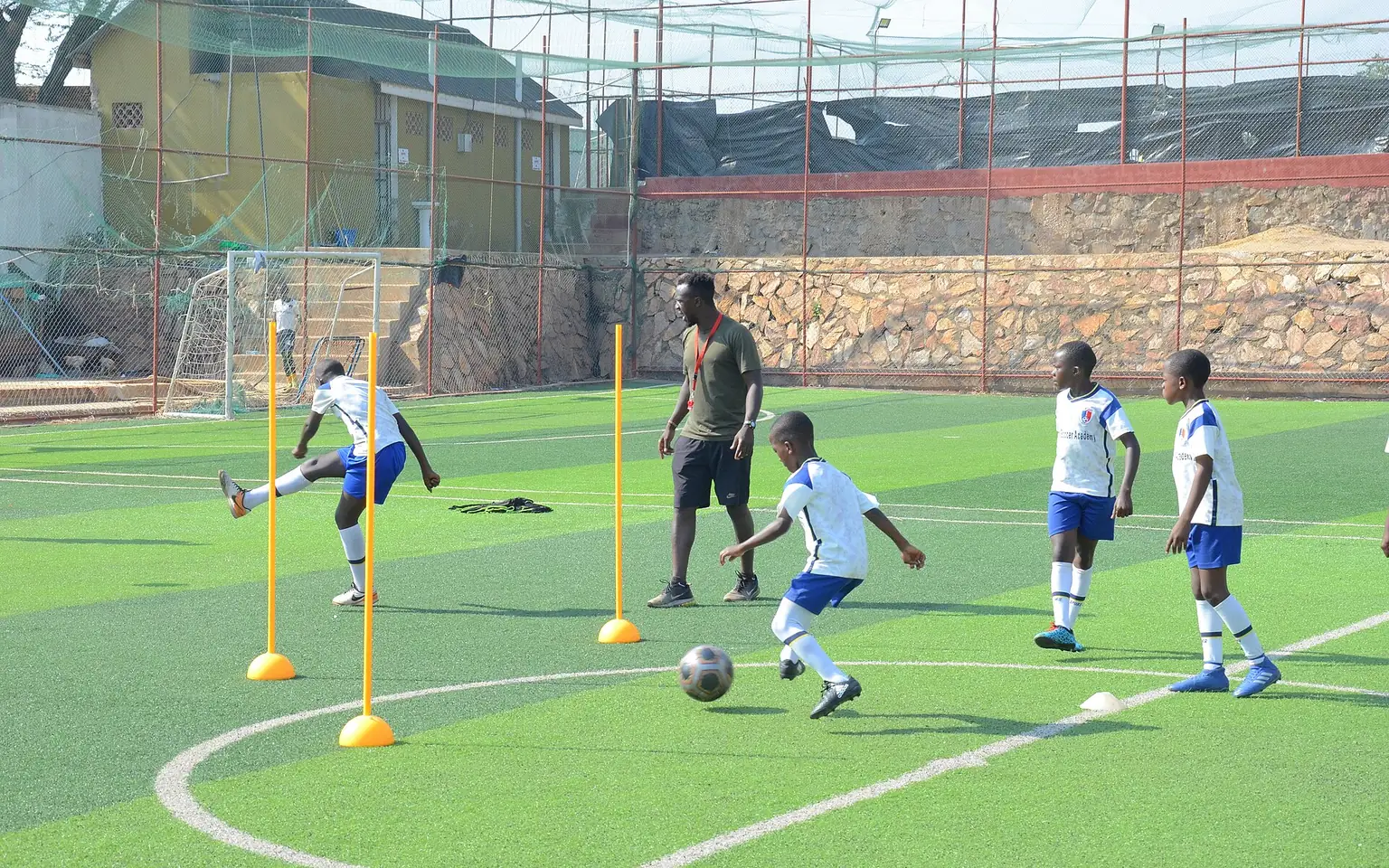
Illustrative historical sports photograph, not an event or athlete endorsement of Sportive Minds. Source: original Commons file; photographed 2021-08-20; credit Samson Ssemakadde; licence CC0 1.0.