
There is a moment in almost every ambitious sporting journey when the applause has stopped and the difficult part has not. A young runner trains while classmates are enjoying a day off. A goalkeeper makes a costly mistake and must return to the same position the following week. A coach discovers that a method which once produced results no longer works. An athlete who has dedicated years to a single goal faces an injury, an unexpected selection decision or an ordinary change in life circumstances.
The popular response is to demand more determination. Never stop. Never doubt. Never surrender. These messages can sound powerful, but they often confuse excellence with an unlimited capacity to suffer. Real progress is less theatrical. It requires careful practice, flexibility, recovery, support and the courage to change direction when evidence demands it. The skills that sustain ambition are not identical to the traits that make a motivational video dramatic.
This feature proposes ten practical skills for navigating the journey towards greatness. It is an editorial framework informed by research, not a scientifically validated checklist that predicts who will become a champion. There are structural barriers that individual mental skills cannot remove: cost, discrimination, injury, unequal selection opportunities and simple unpredictability. Greatness itself has more than one meaning. Winning matters in competition, but a person is not reducible to a result.
1. Purpose: know why you are travelling
Purpose is the difference between pursuing an activity because it matters to you and feeling trapped by the need to satisfy everyone watching. An athlete may begin with the pleasure of moving, solving a sporting problem or belonging to a team. As competition becomes serious, the motivation may become entangled with status, contracts, family expectations and fear of losing an identity.
Deci and Ryan's self-determination theory provides a useful language for thinking about autonomy, competence and relatedness. The theory does not mean that external rewards are always harmful or that a person must enjoy every demanding session. It does suggest that the quality of motivation matters, and that people are affected by environments which either support or undermine their sense of choice.
A practical exercise is to finish three sentences: “I train because…”, “I want to become better at…”, and “If I never win a major title, I still want sport to have given me…”. The last sentence may be the most valuable. It makes room for ambition without allowing a future result to decide whether the entire life has been worthwhile.
2. Deliberate practice: replace blind repetition with learning
Time in training matters, but not every training hour creates the same opportunities to improve. Repeating a familiar drill without useful feedback may be comfortable. Practising a difficult decision with appropriate challenge, feedback and adjustment can be more developmental. Yet the opposite claim—that every hour of concentrated practice inevitably makes someone elite—is also unsupported.
In their 2014 meta-analysis, Macnamara, Hambrick and Oswald examined deliberate practice across several domains. Their analysis found that deliberate practice accounted for part of the variation in sporting performance, not all of it. The paper is an important corrective to the myth that a fixed number of hours determines achievement.
The practical skill is to ask, “What am I trying to learn from today's training?” A volleyball player might work on reading the hitter before committing to a block. A sprinter might use targeted feedback on the first steps. A psychologist might review whether an intervention achieved the client's stated objective. The goal is not to turn every activity into a test, but to make improvement specific enough to observe.
3. Emotional regulation: let pressure be present without giving it control
Competitive anxiety is not proof of weakness. An important match can change breathing, heart rate, stomach sensations and the pace of thoughts. Some athletes perform well while visibly nervous. Others look relaxed and make poor decisions. The aim is not to enforce one perfect emotional state but to develop ways of responding when feelings are intense.
The International Olympic Committee's athlete mental health consensus cautions against confusing ordinary sporting experiences and personality traits with clinical disorders. It also stresses the importance of the environments in which athletes train and compete. Emotional regulation cannot reasonably be reduced to an individual obligation to tolerate unsafe conditions.
Practice a small, repeatable reset: recognise what you are feeling, choose one task cue, and act on the next available opportunity. A tennis player might return attention to the opponent's position. A coach might pause before responding to an error. The emotion may remain. Success here means maintaining a usable relationship with the task, not winning a battle against every feeling.
4. Focus and constructive self-talk: speak to yourself as a skilled coach would
The sentences repeated in an athlete's mind can shape how they interpret mistakes and where attention goes. “Don't miss, don't miss, don't miss” is not necessarily a helpful instruction because it centres the unwanted outcome. “Watch the contact point” can be useful if it describes a task the athlete has practised.
A 2011 meta-analysis of self-talk interventions by Hatzigeorgiadis and colleagues reported a positive average effect on sports tasks, with differences across task type and intervention characteristics. The findings do not establish that repeating positive slogans guarantees success; methods must be practised and chosen for the task.
The skill is to develop short language that supports action rather than personal judgment. A goalkeeper might use “position, see, decide.” A runner might focus on rhythm at a difficult section. A young athlete can replace “I am terrible” with “My timing was late; I can adjust the next repetition.” That is not empty positivity. It is the ability to turn evaluation into information.
5. Resilience: recover from setbacks without celebrating harm
Resilience is often portrayed as the ability to endure any amount of pain. That definition can be dangerous. An athlete who hides symptoms of injury, accepts repeated abuse or sacrifices every relationship may appear determined while becoming less able to continue. The meaningful question is how someone adapts after difficulty while protecting health and dignity.
Fletcher and Sarkar's 2012 qualitative study of Olympic champions, *A Grounded Theory of Psychological Resilience in Olympic Champions*, explored psychological factors associated with coping under major performance pressure. It is a source of conceptual insight, not proof that a universal resilience-training recipe exists. Different athletes and contexts require different supports.
A practical response to a setback has several parts: acknowledge what happened, separate controllable decisions from outcomes, identify useful adjustments, seek support and allow the process enough time. An injury may require medical care and modified goals, not a tougher slogan. A failed trial may provide information about current readiness without passing judgment on a person's entire future.
6. Self-regulation: make a plan, observe reality and change it
Motivation fluctuates. A person who relies on a dramatic burst of enthusiasm may train inconsistently; someone who relies on rigid discipline may ignore important signs that the plan is no longer appropriate. Self-regulation is the capacity to organise action, monitor progress and adjust intelligently.
Zimmerman's 2002 overview of self-regulated learning comes primarily from education, not a sport-specific controlled trial. It is nevertheless useful for thinking about goal-setting, monitoring and reflection. Its application to sport should be treated as an informed transfer of concepts rather than a guarantee of performance outcomes.
Instead of promising to “train harder forever,” an athlete can choose one specific process goal, identify how it will be measured and review it after a realistic interval. A coach can ask whether the current session is producing the intended adaptation. A student entering the sporting professions can build a small portfolio and evaluate feedback. Good discipline includes the ability to change the plan when facts change.
7. Coping and asking for help: do not carry every problem alone
Elite sport sometimes rewards the image of the solitary competitor. Yet training and careers depend on relationships. Coaches, teammates, health professionals, family, employers and peers can provide information and support. Asking for help is not a violation of independence; it can be a way of protecting the ability to keep making independent decisions.
Nicholls and Polman's review *Coping in Sport: A Systematic Review* (2007) examined how sport participants manage stressors. The literature suggests that coping strategies vary by context rather than one method working for everybody. The IOC's 2019 consensus similarly emphasises support systems and appropriate care when clinical symptoms occur.
A useful skill is learning whom to contact for which problem. Tactical feedback belongs with a qualified coach. Persistent pain deserves clinical evaluation. A contractual dispute may require legal advice. Persistent anxiety, hopelessness or disordered eating symptoms warrant suitable mental health care. No champion, coach or mental skills programme should be expected to solve every need alone.
8. Recovery: understand that sustainability is part of effort
Ambitious athletes are familiar with the fear that rest means falling behind. But training adaptation depends on both load and recovery. Chronic insufficient recovery can undermine health and performance, especially in young people whose school, family and sporting demands accumulate across the week.
The American Academy of Pediatrics' 2024 clinical report describes overuse injuries, overtraining and burnout in youth sport. It cautions against excessive demands and emphasises rest, sensible training progression and awareness of symptoms. These recommendations are specific to youth settings and should not be copied blindly into individual adult programmes.
Recovery is not simply sleeping more after a hard event, though sufficient sleep matters. It also includes nutrition, injury management, appropriate variation in load, social connection and the ability to report difficulty honestly. The athlete who needs a training adjustment has not necessarily failed. Sometimes the most disciplined decision is to stop a session, speak with a clinician or allow time for adaptation.
9. Adaptability: keep the direction, reconsider the route
An athlete may have a cherished destination and still need to reconsider how to reach it. A training method becomes less effective. New evidence emerges. A role changes. Financial circumstances make a programme unsustainable. Adaptability means observing these developments without treating every adjustment as betrayal of the original dream.
This skill is related to self-regulation and resilience, but it deserves separate attention because a rigid identity can make change feel like defeat. A swimmer changing coach, a footballer entering education alongside competition or a professional exploring a new role in sport may be making a sophisticated adjustment, not surrendering ambition.
A useful framework is to distinguish *values* from *tactics*. Values might include excellence, curiosity, fairness and service. Tactics might include a particular team, training schedule or career pathway. A tactic can fail while the values remain intact. The ability to redirect effort towards another credible route can preserve meaning and opportunity.
10. Perspective and integrity: become somebody worth being beyond the result
Greatness is often presented as a podium, record, contract or public title. Sporting achievements matter, and excellence deserves celebration. But an athlete also belongs to relationships, a community and a life beyond immediate performance. Integrity means refusing to treat other people, rules or one's own health as disposable obstacles.
The IOC mental health consensus reinforces the importance of athlete environments, identity and wider wellbeing. That evidence cannot establish a single moral definition of greatness. The editorial argument is that ambition should remain compatible with dignity, honesty, medical safety and the ability to live meaningfully after the final competition.
Ask what you would want a teammate, child or future colleague to remember about the way you pursued your goal. That question does not replace the demands of competition. It places those demands in a life large enough to sustain them.
What these ten skills cannot promise
No list of mental skills can eliminate unequal opportunity. Many people train thoughtfully, behave ethically and never reach elite sport because the number of places is limited. Injury, discrimination, family resources, institutional choices and chance all matter. A serious article about greatness must not blame unsuccessful athletes for failing to possess an imagined psychological ingredient.
The popular term “grit” illustrates the danger. Credé, Tynan and Harms' 2017 meta-analytic critique, *Much Ado About Grit*, raises important questions about how this trait is measured and what it adds beyond established characteristics. Persistence can be useful, but a person should not be told that more persistence will always overcome an unsafe or unsustainable situation.
The real opportunity is to build capacities that improve learning and protect an athlete's ability to navigate uncertainty. Some of those capacities may support performance; others may protect health or widen future choices. Both outcomes matter.
An everyday practice: one skill, one week, one honest review
Choose one skill that is relevant to your current situation. Name a small behaviour that would demonstrate it. If your focus is self-talk, practise a brief task cue in a specific training drill. If recovery is the priority, review the total weekly schedule with qualified support. If adaptability is the issue, identify an alternative pathway that still serves your values.
At the end of the week, ask what changed, what evidence you have and what remains uncertain. Do not interpret a single good day as proof of a new identity or a difficult day as evidence of failure. Sustainable development is iterative, personal and sensitive to context.
Coaches and organisations can use the same questions to examine their environments. Are athletes able to seek help without retaliation? Are selection criteria clear? Is rest possible? Is feedback specific and respectful? It is easier to teach young people resilience when the adults around them do not create unnecessary adversity.
Frequently asked questions
What are the most important mental skills in sport? Different sports and individuals require different combinations of attention, emotional regulation, preparation, self-talk, feedback and coping. This ten-part framework is editorial synthesis, not a scientifically validated universal ranking.
Can discipline make someone a champion? Discipline can help sustain appropriate practice, but elite performance depends on many other factors. Research shows that deliberate practice explains part of performance differences, not all of them.
Is resilience the same as never giving up? No. Resilience can include adapting goals, resting, seeking medical care and changing an unsafe environment. Persistence without judgement can become harmful.
How do I become mentally stronger after failure? Start with accurate feedback, supportive relationships and a manageable next action. If difficulties cause persistent distress or impairment, a qualified clinician can help assess what support is appropriate.
The day after the difficult result: a practice in perspective
An athlete has not achieved a major goal. Perhaps a selection decision went against them, an important performance deteriorated or injury changed the season's plan. The first impulse may be to reinterpret years of effort as wasted. That conclusion feels emotionally convincing in the moment, but it does not accurately describe the skills, relationships and knowledge developed along the way.
The next step is not to force optimism. Allow time to acknowledge disappointment and identify any medical or practical needs. Then look at what can be learned without turning the evaluation into a judgement of personal worth. What did the preparation reveal? Which conditions were outside the athlete's control? Which methods might be modified? What support would make the next decision more informed?
A useful review may lead to continuing with the same objective, changing coaches, balancing sport with education or choosing another meaningful role. The decision depends on the person and the circumstances. Persistence is valuable when a path remains safe, worthwhile and realistically supported. Changing course is valuable when evidence shows that the original route is damaging or no longer serves the athlete's priorities.
Professionals can help by asking better questions. A coach can describe specific performance decisions instead of issuing labels about character. A clinician can explain a recovery plan and its uncertainty. A family member can listen before suggesting solutions. A sports organisation can make selection and safeguarding procedures intelligible. Excellence is rarely sustained by an athlete working in isolation from these conditions.
How the ten skills interact in real life
The skills described in this feature should not be understood as ten independent switches that a person turns on. Deliberate practice may fail to produce benefit when recovery is insufficient. Self-regulation may become rigid perfectionism if it lacks perspective. Resilience can be misused as pressure to tolerate a harmful environment. Motivation may deteriorate when an athlete has no genuine say in their development.
A healthier framework holds these tensions together. The athlete chooses a goal that matters, practises specific skills with feedback and evaluates what happens. Emotional regulation helps them return to task-relevant action during difficulty. Relationships and coping strategies make support available when challenges exceed individual resources. Recovery and adaptability protect the capacity to continue. Integrity provides a boundary: not every shortcut is worth taking.
Different life stages will alter the emphasis. A child may most need safe play, parental support and varied learning. A university competitor may face education costs and uncertainty about professional selection. A retiring athlete may need to reconstruct an identity beyond results. No single ranking of psychological skills can capture all of these situations.
For the reader, the value lies in selecting one meaningful change rather than attempting to perfect ten traits at once. The journey is demanding enough without turning self-improvement into another competition. The ability to learn, ask for help and protect long-term wellbeing is not separate from serious ambition; it is part of making ambition liveable.
Evidence context and limits
This ten-part structure is an editorial synthesis, not a validated scale and not a predictor of individual championship success. Deliberate-practice meta-analysis, psychological-skills research, qualitative resilience work, motivation theory and clinical consensus statements differ greatly in what they measure and can establish. Correlation is not causation; an average intervention effect does not guarantee benefit for every athlete. Readers facing significant distress, injury or safeguarding problems should seek qualified support rather than rely on motivational guidance alone.
Research and further reading
- Macnamara, B. N., Hambrick, D. Z., and Oswald, F. L. (2014), Deliberate Practice and Performance: A Meta-Analysis; Psychological Science, limits of practice-based explanations of expertise. Original source
- Hatzigeorgiadis, A., Zourbanos, N., Galanis, E., and Theodorakis, Y. (2011), Self-Talk and Sports Performance: A Meta-Analysis; Perspectives on Psychological Science, sport intervention evidence. Original source
- Deci, E. L., and Ryan, R. M. (2000), The What and Why of Goal Pursuits: Human Needs and the Self-Determination of Behavior; Psychological Inquiry, motivation theory. Original source
- Zimmerman, B. J. (2002), Becoming a Self-Regulated Learner: An Overview; Theory Into Practice, non-sport-specific reflective learning framework. Original source
- Reardon, C. L., and colleagues (2019), Mental Health in Elite Athletes: International Olympic Committee Consensus Statement; British Journal of Sports Medicine, care and environmental responsibility. Original source
- Credé, M., Tynan, M. C., and Harms, P. D. (2017), Much Ado About Grit: A Meta-Analytic Synthesis of the Grit Literature; Journal of Personality and Social Psychology, limits of simplistic persistence claims. Original source
- American Academy of Pediatrics (2024), Overuse Injuries, Overtraining and Burnout in Young Athletes; Pediatrics, youth-specific development and recovery guidance. Original source
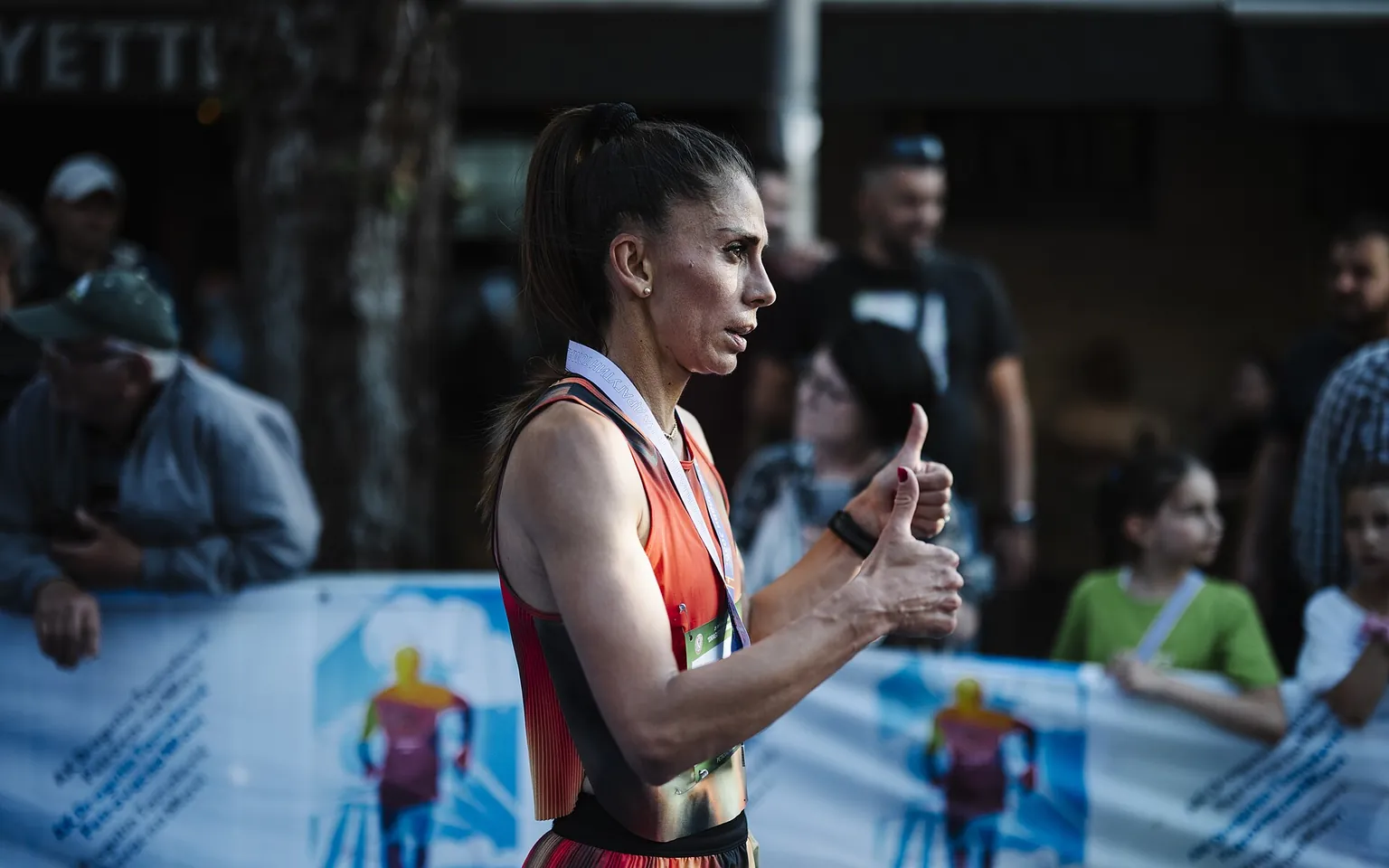
Illustrative historical sports photograph, not an event or athlete endorsement of Sportive Minds. Source: original Commons file; photographed 2026-05-23; credit Shixart1985 / Nenad Stojković; licence CC BY 2.0.